


Product Orchestration Engine

Product Data, Perfectly Orchestrated

Launch products faster with teams that move at full speed. Occtoo powers your master product data and the entire product flow. It's the new approach to PIM, built for agentic commerce.


Why leading companies choose product orchestration

We take the pain out of product data management. Launch faster, collaborate better, and save costs with our product orchestration engine. 

Frictionless workdays for Category Managers

Launch products faster with the control, flexibility, and scale only Occtoo provides. No more excel overload or waiting on IT. 

Full control and speed for Merchandisers

One platform for all product data and media. Launch quicker, collaborate better, and convert more.

Unified product data for IT teams

Occtoo unifies all your product data in one scalable orchestration engine. Eliminate backlogs and welcome AI.

The Product Orchestration Engine

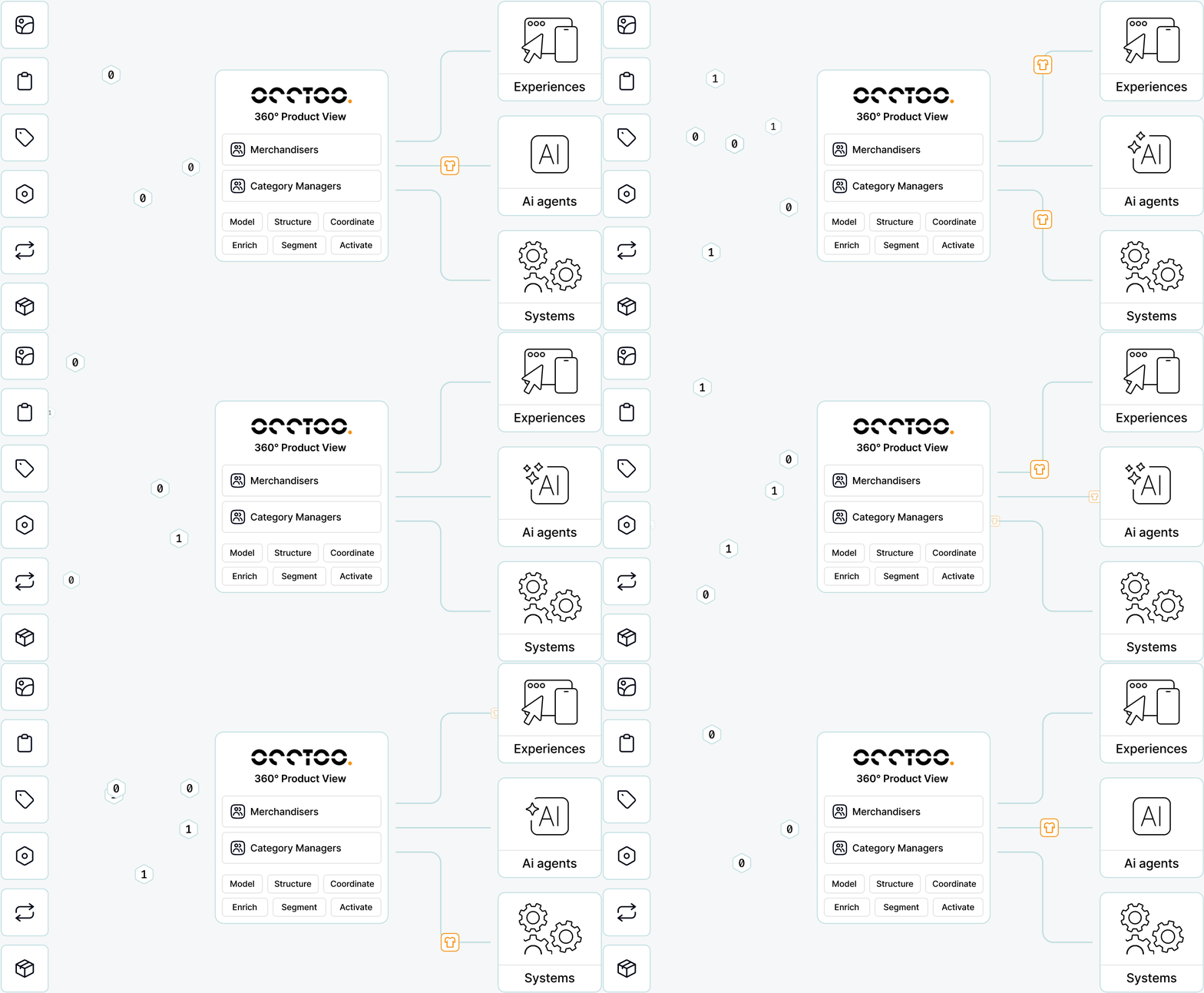
This is us. Connecting product data, empowering teams, and pushing loads of product data exactly where it belongs.

Why product orchestration is the new approach to PIM

Product data management is broken. We believe there’s a better way: one that gets you ready for AI shopping, scales sales, and streamlines your tech stack.

toggle-right

All product data

Orchestrate all your product data — descriptions, media, customer, supplier, and transactional. Make it smoother to use for product detail pages, campaigns and digital product passports. 


smile-square

Scale without limits

No matter how deep or wide you grow, Occtoo keeps up. It's an automated powerhouse built to handle unlimited product data with the highest performance even serving high traffic websites.


components

Always ready for AI

Make product data clean, structured and connected so it's ready to power AI assistants, agents and future digital experiences.


dollar-square

Efficiency that pays off

Reduce integration complexity and streamline the tech stack. Deliver efficiency by reusing and repurposing product data in a no-code workspace. ​


We want to shorten lead times, launch more products, and keep the highest quality. That’s how we stay competitive. With Occtoo, we can do this, without compromise

Edith Rehnberg, Product Data Specialist

Nordic Nest Group

AI-ready data, anywhere ​you need it​

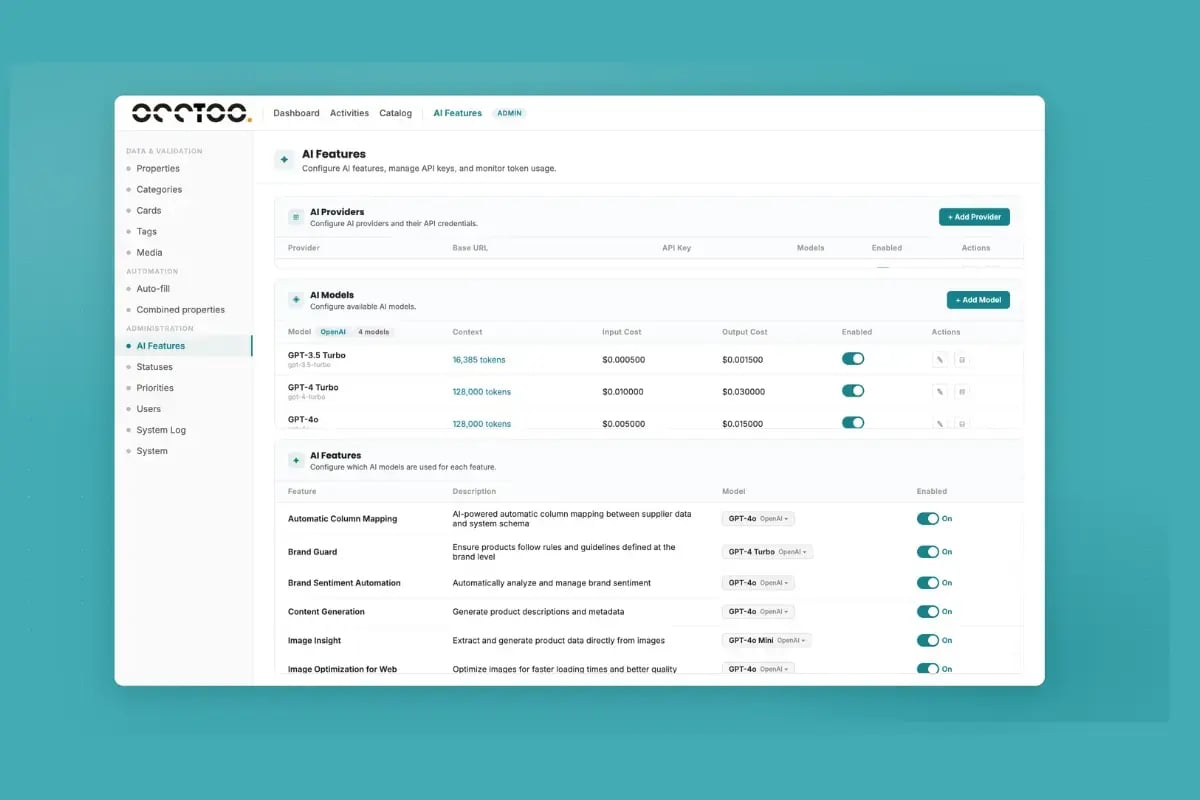
With structured data, your product data is instantly consumable by AI agents, customer-facing assistants, and next-gen tools. Using Occtoo end-points, the data is always accurate and accessible in a secure way, and you’re ready to activate it wherever AI takes you.
MACH CERTIFIED

Members of the MACH Alliance

We are members of a global community of technology providers advocating for future-proofed technology built on MACH (Microservices, API-first, Cloud-Native, Headless) to increase speed to market and ability to innovate. 

Q & A

Product data questions retailers and brands ask

Read more about why product orchestration is the new approach to product data and master product management. 

What is the best way to manage product data across multiple systems?

The most effective way to manage product data across multiple systems is to unify and orchestrate product information instead of storing it in a single system. A product orchestration approach connects data from ERP, PIM, DAM, supplier feeds and commerce platforms, allowing teams to model, enrich and distribute product data in real time across all channels.

What are the limitations of traditional PIM systems?

Traditional PIM systems are designed to store structured product attributes in a central database, but they often struggle in complex enterprise environments. Product data usually exists across many systems such as ERP, supplier feeds, DAM and ecommerce platforms. As a result, PIM projects can become integration-heavy, slow to scale and difficult to adapt when product data sources or business models change.

What is product orchestration?

Product orchestration is a modern approach to product data management that connects and activates product data across multiple systems. Instead of storing product information in a single platform, a product orchestration engine unifies data from ERP, PIM, DAM and supplier feeds. This allows retailers and brands to model, enrich and distribute product data dynamically across digital channels and experiences, and power emerging models such as agentic commerce where AI agents rely on structured product data to discover, recommend and transact.

What is the difference between PIM and product orchestration?

A PIM system manages and stores structured product attributes in a central repository. Product orchestration takes a broader approach by connecting product data across multiple systems such as ERP, PIM, DAM and commerce platforms. Instead of relying on a single database, orchestration allows companies to create a unified master product by combining data from multiple sources, and dynamically transform and distribute that product data across channels and experiences.

How do retailers create a single source of truth for product data?

Retailers and brands create a single source of truth by unifying product data from all relevant systems into a shared product model. This often involves connecting data from ERP systems, PIM platforms, supplier feeds and digital asset systems. By orchestrating these sources in real time, companies can maintain consistent product information while still allowing each system to manage its own data domain.

How can retailers onboard supplier product data faster?

Retailers can onboard supplier product data faster by automating how supplier files are mapped, validated and enriched before products are published. A product orchestration approach allows companies to ingest supplier feeds, normalize attributes and apply validation rules automatically across systems. By orchestrating product data from multiple sources, retailers reduce manual spreadsheet work and enable merchandising teams to launch new products across channels much faster.