The Product Onboarding App

Your next bestseller shouldn't be waiting in a spreadsheet

The Product Onboarding App turns raw supplier files and scattered data into shoppable products, with the workflow and completeness your eCom and purchasing teams need. It's built for volume and your master product, so you can launch more products in less time, season after season.​


Retail onboarding has been painful. Until now.


x

Inconsistent supplier files

Incomplete product data, wrong column names, missing images, duplicate SKUs, and fields that don’t match. 

users

Manual coordination

Chasing updates and solving errors, endless emails and chats with no visibility into real progress.

pause-circle

Slow time-to-market

A stressful environment with missed deadlines, lost sales, and constant pressure on launch windows.

The control room for product onboarding, coordination, and completeness
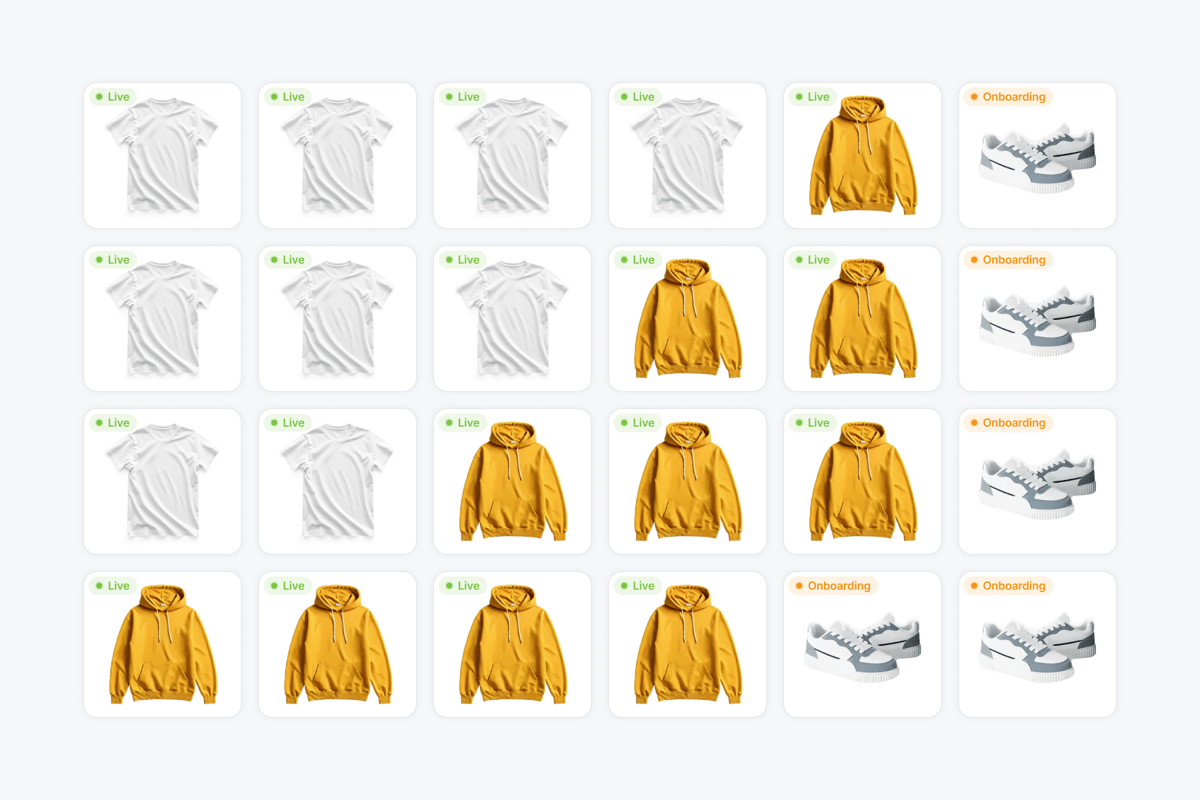
It's onboarding, but also retail execution. You get one structured flow that covers supplier import, enrichment, ownership, and validation from start to finish.

  • Handle the master product - beyond the PIM

  • Scale without limits, it's built for volume

  • Assign clear ownership and deadlines

  • Work in batches with a grid-first view

  • Validate before you import or publish

  • Track readiness and launch progress in real time

We want to shorten lead times, launch more products faster, and keep the highest quality. That’s how we stay competitive. With Occtoo, we can do this, without compromise

Edith Rehnberg, Product Data Specialist

Nordic Nest Group

Launch faster and more with full confidence


Get products “Publish Ready” before they go live

Get products “shelf-ready” before they go live

Nothing goes live unless it’s ready. Red flags stop incomplete data, yellow warnings guide pre-publish checks, and category-level completeness scores highlight gaps instantly. Filter problem rows and resolve issues in bulk.

 No duplicate SKUs or uncontrolled updates

No duplicate SKUs or uncontrolled updates

Every incoming product is automatically cross-checked against your catalogue. Choose to update existing SKUs or create new ones, and see clearly what will be created and what will be updated before you confirm.

Media organised and ready

Media organised and ready

Your storefront should reflect your standards. Bulk import supplier media ZIP files and automatically match them by item number. Reorder, replace, or remove media before publishing. You've got full control. 

Teams that work at full speed

Teams that work at full speed

Set up activities, enrich content, and oversee progress: all in one workflow. Work in batches through a grid built for retail volume, assign responsibility with product, deadline, and owner. 

From supplier file to live product in 5 steps

A repeatable process your whole team can follow.
Create an activity

Create an activity

Name your assortment, select brand, sites, launch date, and upload the supplier file.
Map the columns

Map the columns

Connect supplier field names to your catalogue in minutes with AI assistance.
Enrich the data

Enrich the data

Fill required fields, resolve validation warnings, and reach Order Ready status.
Add product media

Add product media

Upload images per product, bulk import from zip, or drag from supplier file.

Publish

Publish

Review, select, and send validated products live to your chosen sales channels.

Onboarding that keeps up with your business
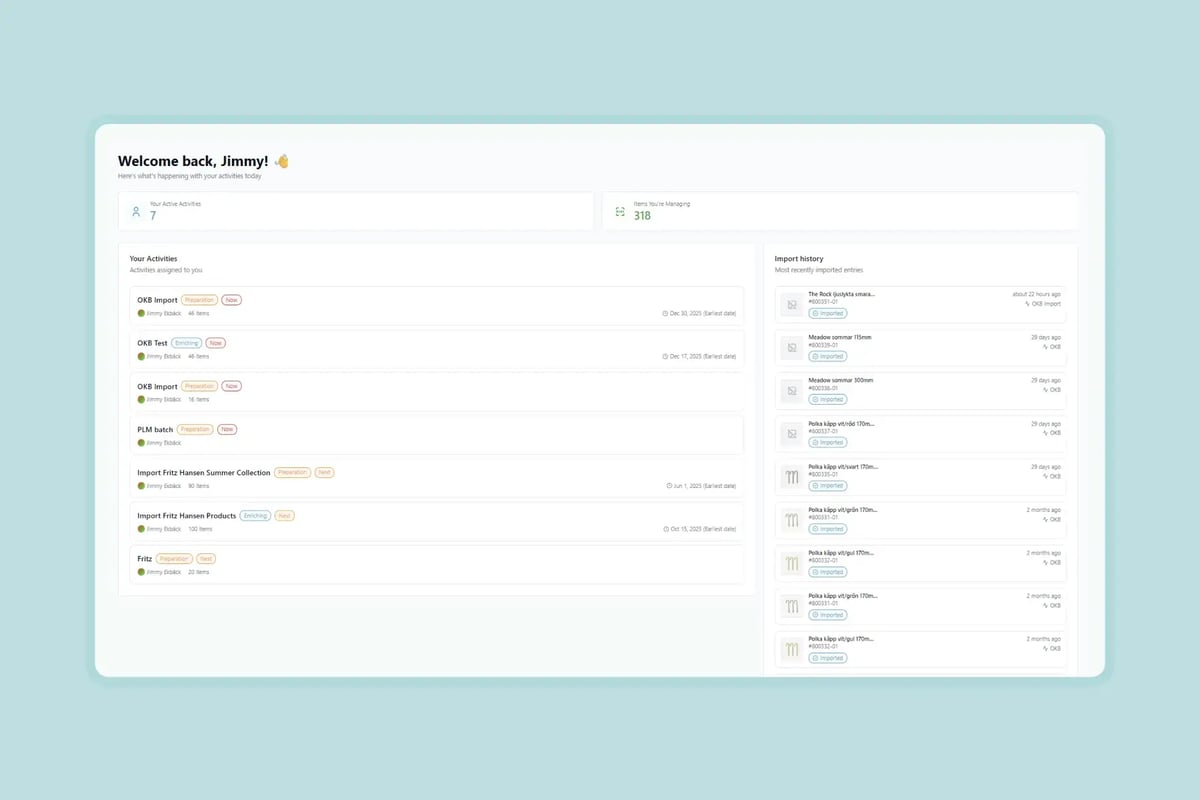
The Product Onboarding App is built for businesses that can't afford slow onboarding. Handle the master product, any volume, reduce time-to-market, and keep your teams focused on growth and sales.

  • Full visibility from supplier file to storefront

  • Faster time to market no matter the volume

  • Happier teams working at full speed

Questions we're glad you're asking.

We hear these a lot. Here's what you need to know.

How can retailers onboard large volumes of product data without bottlenecks?

The key is replacing one-by-one manual workflows with a system built for batch processing. Instead of handling products individually or in groups, buying and sourcing teams can work through large assortments in a grid-first view, processing hundreds or thousands of SKUs at once.

Bottlenecks typically appear in three places: file mapping, data validation, and image management. AI-assisted column mapping eliminates the manual work of translating supplier formats each season. Bulk validation flags issues across entire batches before anything goes live, so problems are caught early rather than discovered after import. And bulk image imports — including ZIP files automatically matched by item number — mean media never holds up a launch.

The result is a workflow where volume is no longer the limiting factor. Whether you are onboarding 50 products or 5,000, the process stays structured, the data stays clean, and your team stays focused on getting products live rather than managing spreadsheets.

How can retail teams reduce time-to-market for new products?

Retail teams reduce time-to-market by removing the bottlenecks between receiving a supplier file and publishing a product. This means automating column mapping, validating data upfront rather than after import, assigning clear enrichment ownership, and processing products in batches rather than one by one. 

With the Product Onboarding App, part of Occtoo, you can manage all your product data — descriptions, media, pricing, and more — and get it ready for product detail pages, campaigns, AI agents and digital product passports.

How do you prevent duplicate SKUs during product import?

Duplicate SKUs are prevented by automatically cross-checking every incoming product against the existing catalogue at the point of import. A good onboarding workflow surfaces conflicts before confirmation, letting the team decide whether to update an existing SKU or create a new one — rather than discovering duplicates after they've caused errors downstream.

How does AI help with supplier file mapping?

AI-assisted column mapping reads the field names in an incoming supplier file and automatically suggests how they match your catalogue attributes. For example, mapping a supplier's "Prod_Desc" field to your "Product Description" field. This reduces the manual effort of translating between supplier formats each season, so your team spends minutes on mapping, not hours.

How do buying teams track product launch readiness?

Buying teams track product launch readiness most effectively when they have a single view that shows completeness status per SKU, per batch, or per launch date. Colour-coded validation flags, category-level completeness scores, and activity-based ownership mean teams can see at a glance what's ready, what's blocked, and who is responsible for resolving gaps.