To get ready for the EU Digital Product Passport (DPP), you need one complete, structured version of every product: materials, origin, certifications, sustainability data, supplier information and more. Most companies already have that data. It's just spread across ERP, PLM, PIM, supplier files and spreadsheets. The hard part of DPP is bringing it together, and that's a product data problem long before it's a compliance problem.
What is a Digital Product Passport?
A Digital Product Passport is a digital record that follows a product through its life. It's part of the EU's Ecodesign for Sustainable Products Regulation (ESPR). Customers, recyclers, repairers and authorities reach it through a data carrier on the product, usually a QR code.
The passport has to be readable by humans and by machines. Some data will be public, like materials and care instructions. Some will only be available to authorities or recyclers.
When does the DPP become mandatory?
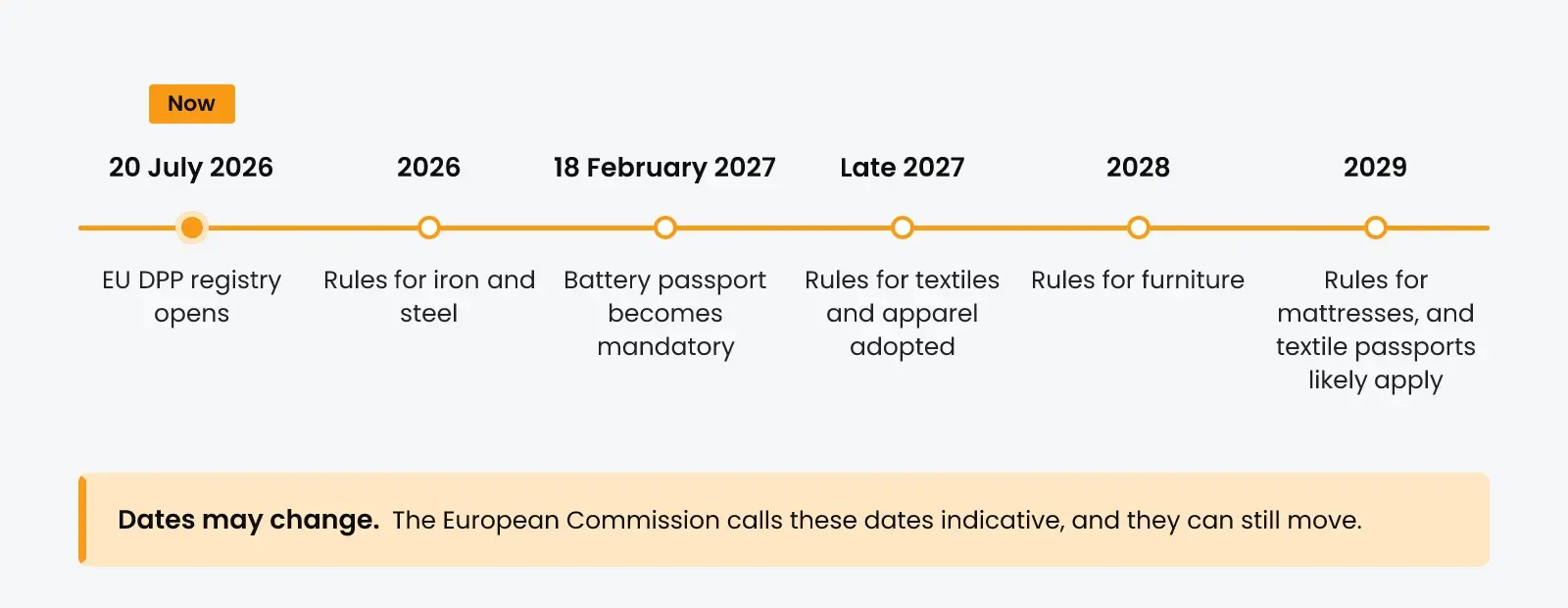
Sooner than most companies think. The European Commission opened the central DPP registry on 20 July 2026, and the requirements now roll out product group by product group:
- Batteries come first. From 18 February 2027, electric vehicle batteries, light means of transport batteries and industrial batteries above 2 kWh need a battery passport.
- Iron and steel are first in line under the ESPR working plan, with rules expected in 2026.
- Textiles, tyres and aluminium follow. The Commission plans to adopt the rules for textiles and apparel in late 2027, so passports for clothing are likely to apply around 2029.
- Furniture is planned for 2028 and mattresses for 2029.
- Construction products, toys and detergents will also need passports, under their own EU regulations.
Once the rules for a product group are adopted, companies get at least 18 months to comply. For a fashion or furniture brand, that may sound like plenty of time. It isn't, if your product data lives in seven different places.
Keep in mind that these dates can change. The Commission describes them as indicative, so they may still move.
What data does a Digital Product Passport need?
More than most teams expect. The exact requirements depend on the product group, but a typical passport draws on:
- Product identity: unique ID, model, batch or item number, manufacturer
- Materials and composition: fibre content, recycled content, substances of concern
- Origin and supply chain: where it was made, by which supplier, from which materials
- Sustainability data: carbon footprint, durability, recyclability
- Certifications and compliance documents: test reports, declarations, safety sheets
- Use and end of life: care, repair, spare parts, disassembly and recycling instructions
Look at that list again and ask yourself where each item lives today. For most companies, the answer is: everywhere.
Why is DPP so hard for most companies?
Because no single system holds the whole product.
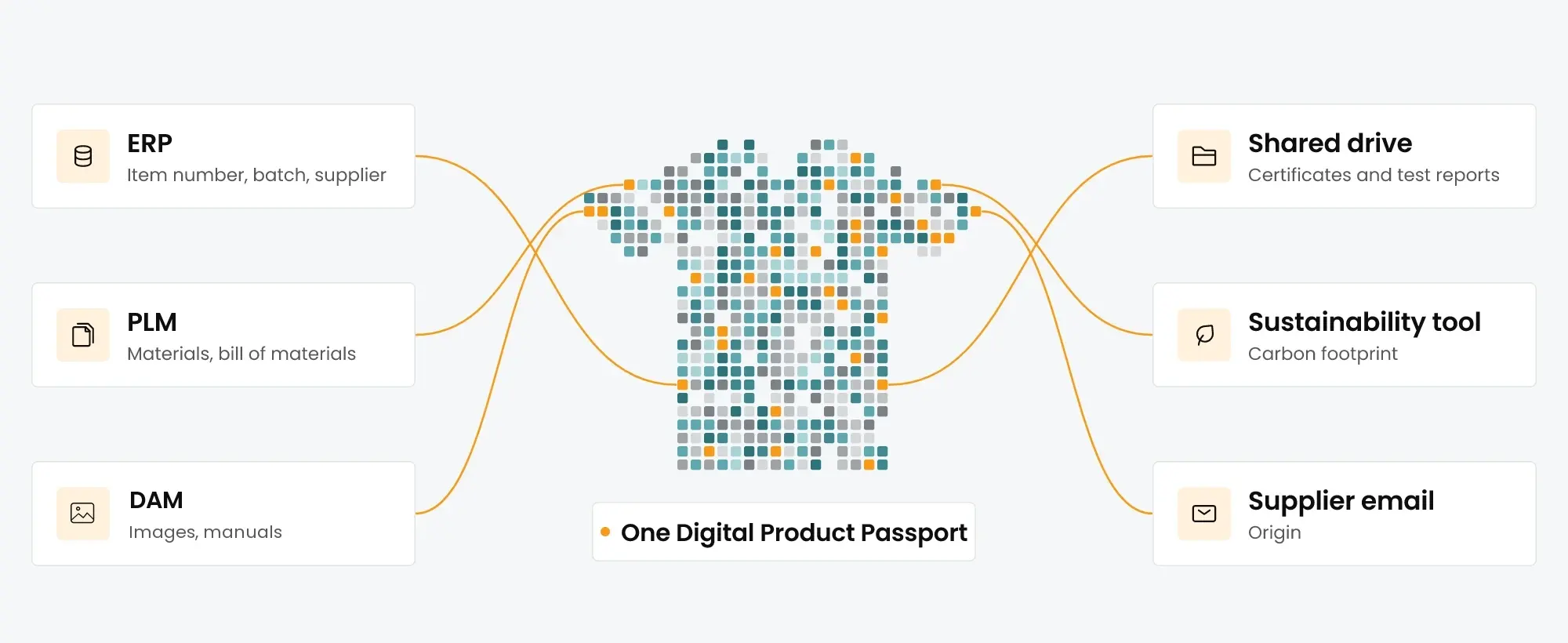
The ERP knows the item number, the supplier and the batch. The PLM knows the materials and the bill of materials. The PIM holds descriptions and attributes. Certificates sit in a shared drive. Carbon data comes from a sustainability tool or a consultant's spreadsheet. And some of it only exists in a supplier's email.
Each system was built for its own job. None of them was built to deliver one complete, machine-readable product record to the outside world.
Isn't my PIM enough for DPP?
You'll hear a lot of PIM vendors say the PIM is the natural home for DPP data. Add a few new attributes for carbon footprint and recycled content, connect a passport app, and you're done.
It's a good start, but a PIM only covers part of what a passport needs. A traditional PIM manages product content: attributes, descriptions and images. Batch and order data lives in the ERP. Materials and bills of materials live in the PLM. Certificates sit with suppliers or in shared drives. Carbon data comes from sustainability tools. Copying all of that into the PIM by hand means a second version of the truth, and one more thing to keep updated.
So a PIM isn't the answer. A Digital Product Passport needs all of these sources, and Occtoo replaces the PIM while connecting the rest.
How does product orchestration solve the DPP data problem?
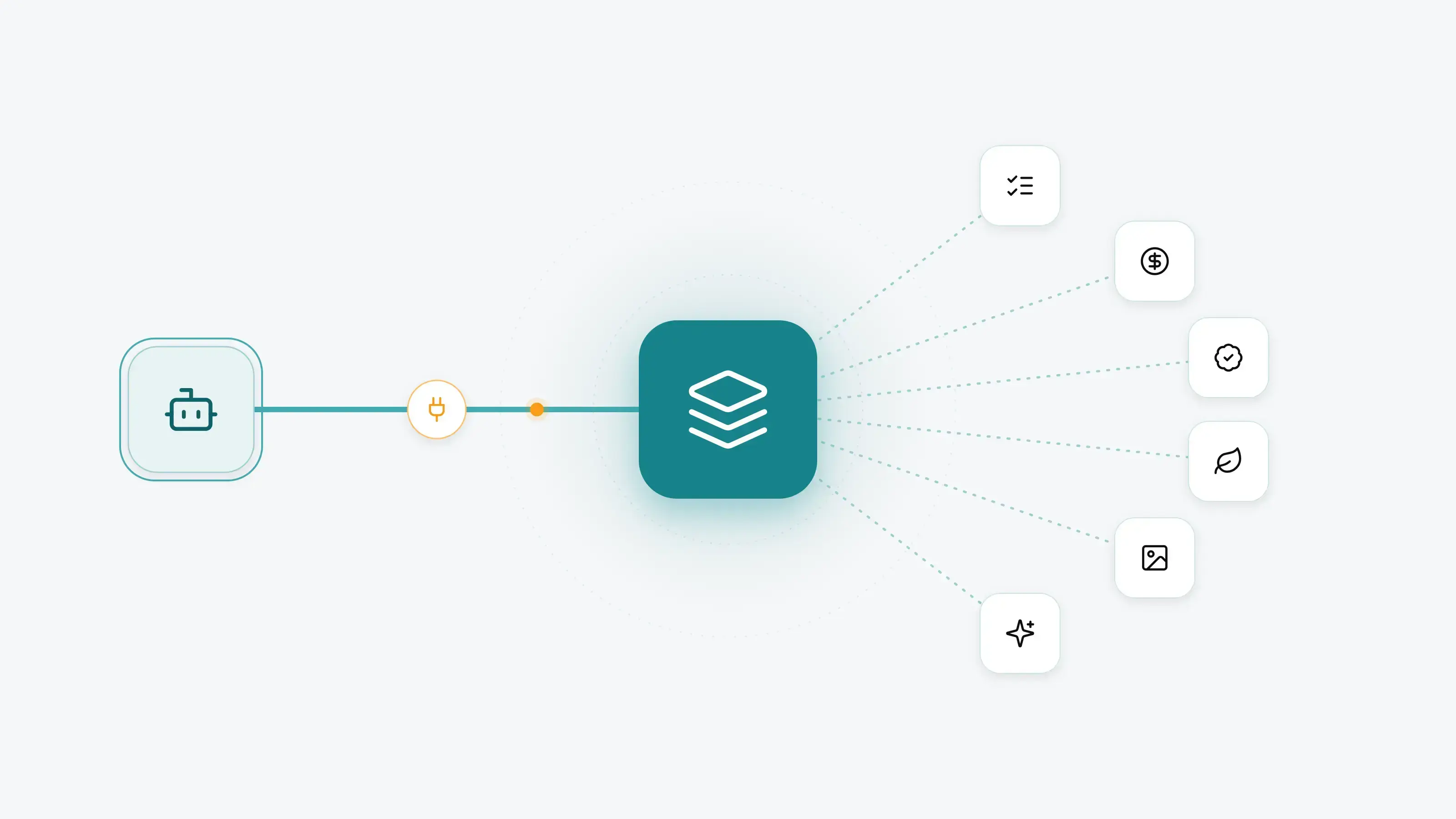
Product orchestration means connecting all your product data sources, combining them into one complete product, and sending that product wherever it needs to go. At Occtoo, we call that complete product the Master Product: one unified view of everything that makes a product sellable, and now, compliant.
For DPP, that works in three steps:
- Connect the sources you already have. ERP, PLM, DAM, supplier feeds and sustainability tools keep their job. Your PIM is connected too, until Occtoo takes over its job and you phase it out.
- Build one Master Product. Occtoo combines the data, from the smallest product attribute down to order level traceability, into one structured record per product.
- Activate it in the format DPP needs. The same Master Product can feed a public passport page, a restricted view for authorities, a DPP service provider, or an AI agent asking for product information.
Occtoo works with the DPP provider or passport app you choose, and makes sure it gets complete data. You don't need an extra integration platform to get there.
Because the passport data and your commerce data come from the same Master Product, you don't build a separate DPP project on the side. When a supplier changes a material or a certificate is renewed, it updates everywhere at once.
Where should you start?
You don't need the final EU rules to begin. Start with the data.
- Map your data. List the information a passport is likely to need for your product group, and find out which system holds each part.
- Find the gaps. Some data will be missing entirely, often supplier and sustainability data. Start collecting it now.
- Connect before you comply. Bring the data together in one place first. Choosing a passport format or provider is much easier when the data is already complete.
- Pick one product group to pilot. Build a passport for one category and learn from it before you scale.
Why DPP is also a business opportunity
Every piece of data a Digital Product Passport needs is also data your customers, your retailers and AI agents increasingly ask for. Materials, origin, durability and repairability are becoming reasons to buy.
The companies that get their product data together for DPP will be ready for every channel that asks for complete, trustworthy product information. See how Occtoo supports the Digital Product Passport.