Most teams do not decide to replace their PIM. They just start noticing the friction. Here are the signs it is time to think bigger.
Your PIM was a good idea. It still might be. The ability to centralise product attributes, manage descriptions, and push content to a storefront was a genuine step forward when most of that work was happening in spreadsheets.
But commerce has changed. It is 2026. Managing product data well matters more than ever. A traditional PIM was built for a different era, and for most organisations, it is no longer the right tool for the job.
Sign 1: Your data lives in more places than your PIM
Think of your Master Product as a T-shirt stretched across all the systems that hold product data. Over time it gets pulled in too many directions. Eventually, it tears. Suddenly, you have holes everywhere.
That is what happens to most organisations. The PIM holds attributes and descriptions. But pricing lives in the ERP. Stock levels are in the OMS. Campaign data is in a marketing tool. Sustainability information is in a spreadsheet somewhere. Delivery times are in another system entirely.
When a customer or an AI agent needs to evaluate your product, all of that information needs to come together. It rarely does cleanly. The PIM was built to manage one slice of the picture. The Master Product: the complete, unified view of everything required to make a product sellable anywhere, lives across six systems, and nobody owns it.
If your teams are constantly chasing data across systems to answer basic questions, that is the friction. The PIM is not the problem. It was never designed to solve this.
Sign 2: Getting a new product live is a project, not a process
In a well-functioning setup, going from supplier file to live product is a process. A predictable sequence of steps with clear ownership, validation, and a go-live date you can actually hit.
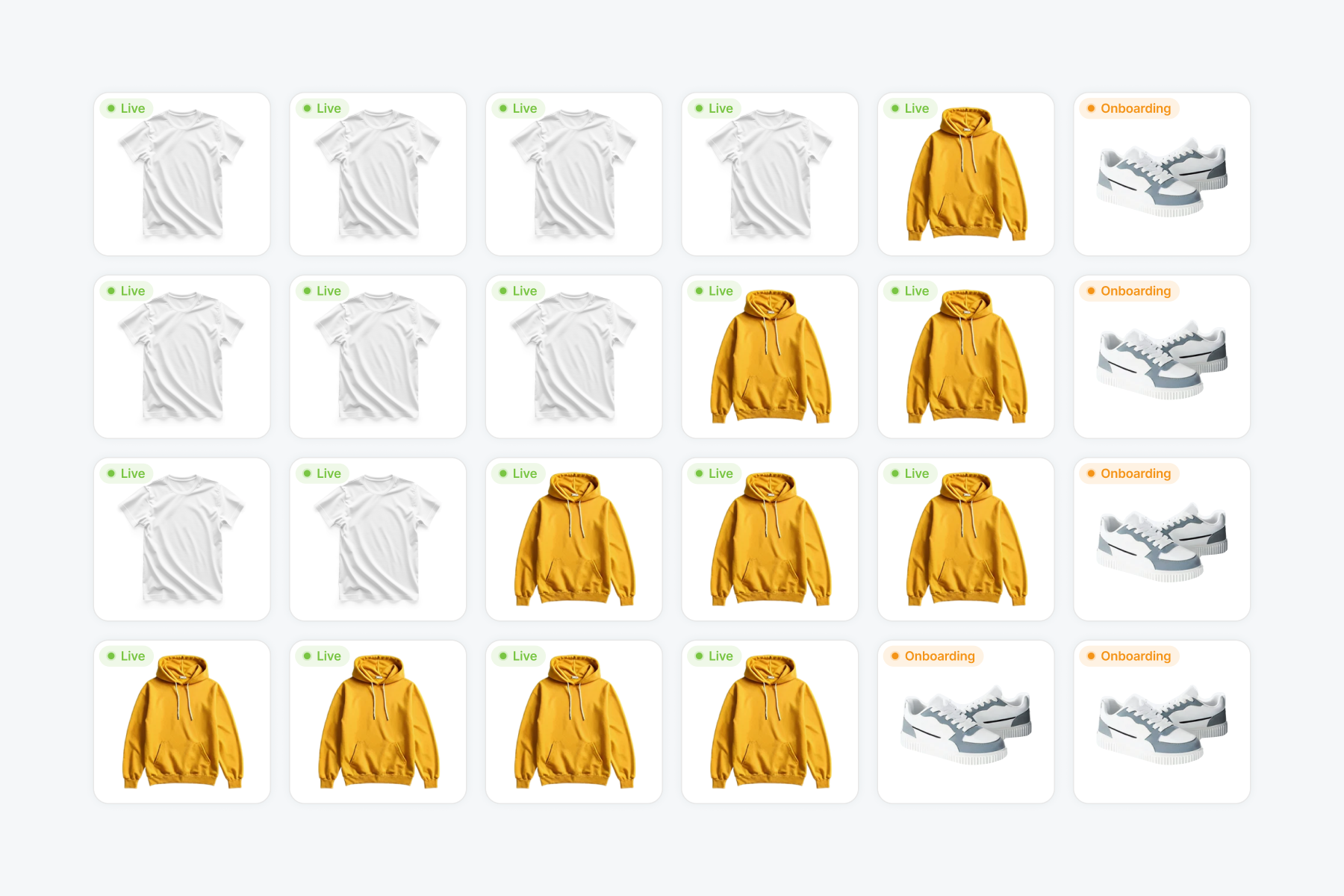
For most teams using traditional PIM setups, it is a project. Somebody receives a supplier file. It does not match the data model. Manual mapping begins. Errors surface. IT gets involved. The go-live date moves.
Nordic Nest's Master Data Specialist put it well:
"During high season, we have to book slots for system updates and coordinate tightly with tech and sales to avoid collisions."
That is not a process. That is a workaround with a calendar attached.
The question is not whether your PIM is bad. The question is whether it was ever designed to handle this, and for most, it was not.
Sign 3: Every new channel requires a new integration project
When your PIM was built, the channels it needed to feed were predictable. A website. Maybe a print catalogue. A B2B portal if you were ambitious.
Today, product data needs to reach websites, mobile apps, B2B portals, marketplace feeds, smart cabinets, AI agents, and automated procurement systems. Each new channel should be a configuration, not a project.
If adding a new destination for your product data requires weeks of integration work, a development budget, and a project manager, your architecture is working against you. The data exists. Getting it where it needs to go should not be this hard.
Alligo learned this when they tried to push product data into their smart RFID cabinets: physical units at workplaces across the Nordics that automatically reorder products when stock runs low. The data structures did not match. What should have been a configuration became a problem. Not because the PIM was broken. Because it was never designed for a world where the buy button moves.
Sign 4: Your data model has stopped moving with you
PIMs have evolved. Modern ones are more flexible than they used to be. The vendors have invested in better data modelling, more configurable attributes, and improved workflows.
But the underlying design philosophy has not changed. PIMs were built to manage structured product content for a defined set of channels. That was the job. They did it well.
The problem is not that your PIM stopped evolving. It is that the job itself has changed. Today, product data needs to include pricing, inventory, sustainability certifications, usage scenarios, and the contextual information AI agents need to make a confident recommendation.
The result is always the same. Instead of the system adapting to new needs, the business adapts to the system. Workarounds get built. Those workarounds become the process. The sign is not that your PIM is bad. It was built for a different version of commerce.
Sign 5: Your business teams are waiting on IT
This one is quiet. It shows up in backlogs, in delayed campaigns, in product launches that take longer than they should.
When a category manager needs to update a product attribute, they raise a ticket. When a merchandiser needs a new data feed for a campaign, they wait. When an e-commerce team wants to launch in a new market, IT estimates a two-month project.
None of this is IT's fault. Traditional PIM systems were not built for business team self-service. They require technical resources to configure, maintain, and extend. The result is a permanent bottleneck at the intersection of data and business needs.
The teams closest to the customer, the ones who know what needs to change and why, cannot make those changes without help. That gap costs time. It costs launches. It costs a competitive position.
There is also a quieter cost that rarely shows up in any report. These are often the most capable, most motivated people in the organisation. They can see exactly what needs to happen. They just cannot make it happen. Day after day, the gap between what they know and what they can actually do wears on them.
The best people do not stay in jobs where the system works against them.
"Work will simply be more fun," said Edith Rehnberg, Master Data Specialist at Nordic Nest, when describing what moving to a self-service setup meant for her team.
"Instead of firefighting, we'll be creating more value."
That shift, from frustration to impact is worth more than most organisations account for.
Sign 6: Your PIM has no answer for AI agents
This is the sign most teams have not noticed yet. But they will.
AI agents and agentic commerce are already changing how products get discovered and purchased. ChatGPT, Perplexity, Gemini, and the procurement systems increasingly running on these models are searching, evaluating, and recommending products.
For an AI agent to find, evaluate, and recommend your product, it needs more than attributes and descriptions. It needs context. Usage scenarios. Certifications. Sustainability data. Compatibility information. Brand narrative. The full picture of what your product is and what it means.
A traditional PIM holds what a product is. A Master Product holds what a product means. Those are not the same thing. And in agentic commerce, the gap between the two is the gap between being visible and being invisible.
Poor product data quality does not just limit your SEO. In agentic commerce, it can make you invisible entirely.
Sign 7: The full picture lives in a spreadsheet
If your organisation has an Excel file, or several, that holds the information your PIM cannot, that is the clearest signal of all.
Campaign planning in tabs. Launch timelines in rows. Data quality tracking in a separate document that only two people understand. Attribute mapping in a file that nobody wants to touch because the formulas are fragile.
This is not a people problem. It is an architecture problem. The spreadsheet exists because the system cannot hold what the business needs it to hold. And every spreadsheet is a risk: broken formulas, deleted rows, stale data, and institutional knowledge that leaves when the person who built it leaves.
What comes after PIM?
The answer is not to throw the PIM away. Many organisations, including Nelly.com, keep their PIM and add an engine above it.
That layer is a Product Orchestration Engine. It sits between your data sources and your destinations. It pulls product information from wherever it lives: ERP, PIM, supplier feeds, marketing tools, and builds a unified Master Product. From there, it activates that data to wherever it needs to go: any channel, any system, any AI agent.
The result is not more complexity. It is less. One engine that owns the full picture. Business teams who can self-serve. New channels that take days to configure, not weeks to build. And a data foundation ready for whatever commerce becomes next.
The PIM had a good run. For most organisations, the next step is not a better PIM. It is something built for a different era of commerce entirely.